
Dental implants typically cost between $3,000 and $4,500 each, influenced by factors like material quality, location, and expert fees. You'll need to take into account additional costs for X-rays and consultations as well. Financing options such as payment plans and third-party lenders can help make this investment more manageable. Ultimately, choosing a qualified dental professional is essential for success. To uncover more about how to save and navigate your options effectively, explore the details further.
Key Takeaways
- Dental implant costs typically range from $3,000 to $4,500 per implant, with additional fees for assessments and imaging.
- Factors influencing costs include material quality, geographic location, and specialized services available in the area.
- Consider titanium for strength and durability or zirconia for aesthetic appeal, discussing options with your dentist.
- Explore financing options like payment plans and third-party financing to manage costs effectively.
- Choose a qualified dental professional by checking credentials and patient reviews, ensuring a successful long-term investment.
Understanding Dental Implants: An Overview
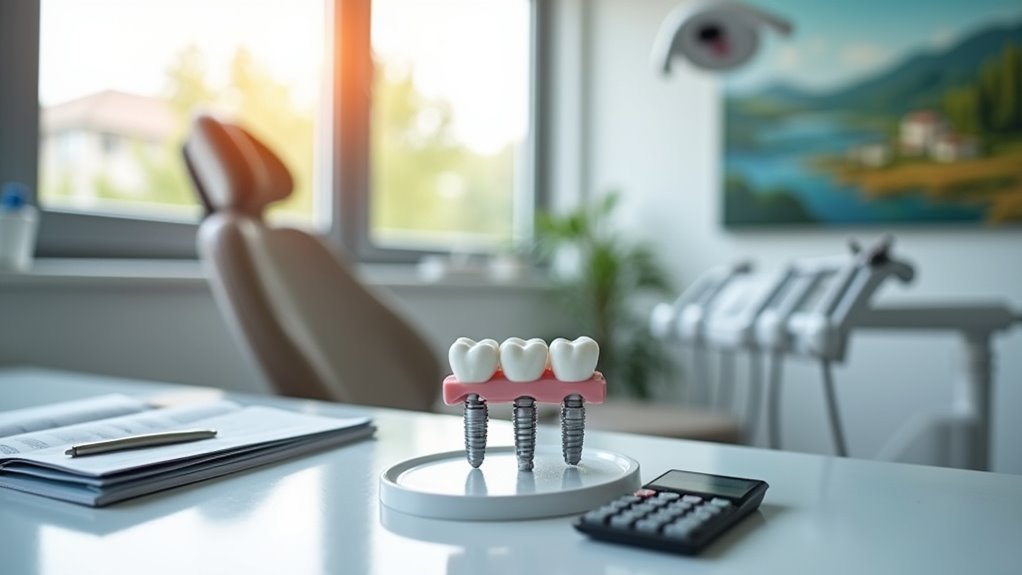
When you're considering dental implants, it's crucial to understand what they're and how they work.
Dental implants are artificial tooth roots, typically made of titanium, that function as a sturdy foundation for fixed or removable replacement teeth. Their success largely depends on factors like bone health and oral hygiene.
Many patients report high satisfaction rates, with testimonials highlighting the improved quality of life and restored confidence that implants can bring.
By choosing qualified professionals and following aftercare instructions, you can greatly enhance implant success.
This way, you're not just addressing a dental issue, but also investing in your overall oral health and well-being.
Understanding these aspects empowers you to make informed decisions about your dental care.
Factors Influencing Dental Implant Costs
When considering dental implant costs, you'll find that several key factors can influence the final price.
The quality of implant materials used can considerably affect durability and overall success, while your geographic location may also play an essential role in pricing variations.
Understanding these elements can help you make a more informed decision about your dental options.
Implant Material Quality
The quality of implant materials significantly influences the overall cost of dental implants, making it essential for you to understand how these factors can affect your investment.
High-quality materials, such as titanium and zirconia, typically offer greater implant durability compared to lower-cost alternatives. These premium options often come with a higher price tag but provide benefits such as biocompatibility and resistance to corrosion, which contribute to long-lasting results.
Additionally, the choice of material types affects the fabrication and installation process, impacting labor costs. As you consider your options, weigh the importance of material quality against your budget, ensuring you select a dental implant that meets both your financial and health needs for superior results.
Geographic Location Impact
Understanding how geographic location impacts dental implant costs is essential for making informed decisions about your treatment. Generally, urban areas have higher living costs, leading to increased dental fees compared to rural regions. This results in significant cost comparisons between urban versus rural practices.
In cities, overhead expenses are higher, driving prices up, while rural dentists may offer more competitive rates to attract patients. Additionally, the availability of specialized dental services varies geographically, affecting overall costs.
Breakdown of Dental Implant Procedure Costs
Dental implant procedures can vary greatly in cost, often ranging from $3,000 to $4,500 per implant. The overall price is influenced by several factors, including the dental implant types you choose and the anesthesia options available.
To help you understand the breakdown:
- Consultation and X-rays: Initial assessments and imaging can add a few hundred dollars to your total.
- Implant placement: This is the core procedure, typically costing the most of the total.
- Restoration: The final crown or prosthetic tooth can vary widely in expense, depending on materials.
Being informed can help you manage your budget and expectations when considering dental implants. Knowing these costs allows you to make decisions that best serve your health and well-being.
Types of Materials Used in Dental Implants
When considering dental implants, it's essential to know about the various materials that can impact durability, aesthetics, and overall success.
The two most popular options are titanium implants and zirconia implants. Titanium implants are favored for their strength and biocompatibility, allowing them to fuse seamlessly with your jawbone. This makes them a reliable choice for many patients.
On the other hand, zirconia implants offer a tooth-like appearance, making them an excellent option for those concerned about aesthetics. They're metal-free, which appeals to individuals with metal allergies.
Each material has its advantages, so discussing your personal needs with your dentist can help you make the best decision to achieve ideal results while serving the needs of your oral health.
Additional Costs to Consider: X-rays and Consultations
When considering dental implants, you need to factor in the costs of X-rays and consultations, which are essential for accurate planning and treatment.
These diagnostic tools help your dentist assess your oral health and determine the best approach for your implants.
Understanding these additional expenses will give you a clearer picture of the overall investment involved in your dental care.
Importance of X-rays
Before undergoing a dental implant procedure, understanding the importance of X-rays can't be overstated, as they play a crucial role in evaluating your oral health.
X-rays offer several significant benefits that enhance the overall accuracy of your treatment plan:
- Identifying underlying issues: X-rays help discover bone density, tumors, or infections that could affect your procedure.
- Evaluating tooth alignment: They allow for precise placement of implants, ensuring they integrate well with your jawbone.
- Improving diagnostic accuracy: X-rays provide a clear view of your dental structure, helping your dentist make informed decisions.
Consultation Fees Overview
Understanding consultation fees is essential when planning for dental implants, as these costs can vary considerably among dental practices.
Typically, the consultation length ranges from 30 minutes to an hour, allowing ample time for your dentist to evaluate your needs. During this session, you'll discuss your medical history, the implant process, and any specific concerns you may have.
The consultation benefits include gaining a clear treatment plan and understanding associated costs, but fees can add to your overall expenses.
It's wise to inquire about the fee upfront and see if it covers any necessary diagnostic tests, like X-rays. This proactive approach helps you budget effectively and guarantee you're fully prepared for your dental journey.
Insurance Coverage for Dental Implants
How can you navigate insurance coverage for dental implants? Understanding your insurance's limitations and coverage policies is essential in managing your costs effectively. Here are some steps to guide you:
- Review your policy: Check if dental implants are covered under your plan.
- Speak with your provider: Contact your insurance company for clarity on specific benefits and constraints.
- Gather documentation: Prepare any necessary medical records or referrals to support your case.
Many policies often treat implants as cosmetic, which means they mightn't provide coverage.
However, advocating for yourself and understanding your options can make a difference.
Don't hesitate to explore all available resources to help you along this journey toward better oral health.
Financing Options and Payment Plans
Steering through insurance can sometimes leave you with unexpected costs for dental implants, prompting the need for financing options and payment plans.
Many dental practices offer financing solutions that make implants more accessible. You can explore options like installment plans, which often come with flexible payments, allowing you to spread the cost over several months.
Additionally, third-party financing companies can assist you in securing loans tailored for dental procedures, ensuring you can manage expenses without financial strain.
Be sure to discuss these options with your dentist, as they may have partnerships with specific lenders to help simplify the process.
Ultimately, finding the right plan enables you to focus on your oral health without the burden of hefty upfront costs.
Tips for Finding Affordable Dental Implant Solutions
When seeking affordable dental implant solutions, start by researching local providers to compare prices and services.
Many offices offer payment plans that can make the costs more manageable.
Research Local Providers
As you navigate the quest for affordable dental implant solutions, researching local providers can make a significant difference in both quality and cost. Start by looking into provider credentials to verify they've the necessary training and experience.
Additionally, local reviews from previous patients offer valuable insights into the quality of care.
Here are some tips to guide your research:
- Check online platforms for patient testimonials and ratings.
- Compare pricing among different providers to find competitive rates.
- Inquire about specific technology or techniques used to enhance outcomes.
Explore Payment Plans
After researching local providers, consider the financial options available to make dental implants more accessible.
Many dental offices offer flexible payment options, allowing you to choose a plan that suits your financial situation. Look for providers who partner with third-party financing companies, offering low or no-interest payment plans.
Also, inquire about in-house financing programs that allow you to pay in manageable installments.
Developing a specific budgeting strategy can also help alleviate the financial burden. Track your expenses and determine how much you can allocate each month toward your dental needs.
Don't hesitate to discuss your budget with your dental provider; they can often suggest alternative ways to manage costs effectively, ensuring you receive the care you need without overwhelming your finances.
Importance of Choosing a Qualified Dental Professional
How do you guarantee you're making the best choice for your dental implants? The right dental professional can make all the difference in your experience and outcome. Consider the following factors to verify your choice aligns with your needs:
- Qualifications Verification: Check their education, certifications, and specialization in implant dentistry.
- Dentist Recommendations: Seek referrals from reputable dental associations and trusted sources.
- Patient Reviews: Look for feedback on the dentist's skills in implant procedures and overall patient satisfaction.
Choosing a qualified dental professional not only secures successful placement but also enhances your comfort and trust in the process.
Don't compromise on your health; invest the time to select someone who meets the highest standards in the field.
Long-term Savings and Value of Dental Implants

Choosing a qualified dental professional sets the stage for not just a successful implant procedure, but also for long-term savings and value.
While the initial cost of dental implants may seem high, consider them a financial investment in your oral health. Implants often lead to long-term benefits, such as improved function, aesthetics, and bone preservation.
Unlike dentures or bridges, which may require frequent replacements, implants can last a lifetime when properly maintained. This longevity can considerably reduce future dental expenses.
Additionally, enhancing your smile can boost your confidence and overall quality of life, providing value beyond monetary cost.