
Professional dental cleanings play a crucial role in maintaining ideal oral health. While at-home care can remove some plaque, many adults may struggle with thorough cleaning, often missing hard-to-reach areas. Regular appointments allow dentists to detect potential issues early and offer tailored advice for better home practices. Mistakes in daily hygiene can lead to complications, making awareness essential. Discover further insights on effective oral hygiene practices and the importance of professional support for lasting dental health.
Highlights
- Regular professional cleanings complement home care, allowing dental professionals to detect potential issues early and prevent cavities and gum disease.
- At-home oral hygiene often fails to remove nearly 50% of plaque and tartar due to hard-to-reach areas and improper techniques.
- Professional cleanings include scaling and polishing, as well as tailored education on best oral hygiene practices specific to individual needs.
- Common mistakes at home, like improper brushing and neglecting flossing, can lead to gum disease and other oral health issues.
- Diet plays a crucial role in oral health; sugary foods can lead to decay while proper nutrition strengthens enamel and gums.
The Importance of Regular Professional Cleanings

While many individuals prioritize daily brushing and flossing, the significance of regular professional cleanings cannot be overstated. These cleanings, typically performed every six months, serve as an essential complement to at-home oral care routines.
Regular check-ups enable dental professionals to monitor overall oral health, detecting potential issues early on. During these appointments, plaque removal is executed thoroughly, addressing areas that may be missed by everyday cleaning practices.
This proactive approach not only minimizes the risk of cavities and gum disease, but it also fosters a trusting relationship between patients and their dental caregivers. Through consistent professional cleanings, individuals can contribute effectively to their oral health while empowering their commitment to serve and support others in their dental journeys.
Professional dental cleanings are necessary to eliminate tartar buildup, which cannot be removed by regular brushing and flossing alone.
Understanding the Limitations of Home Care
Despite the best intentions of diligent home care, studies indicate that nearly 50% of adults may fail to adequately remove plaque and tartar buildup.
While daily brushing and the use of various flossing techniques are essential, they may not be sufficient to achieve complete plaque removal. Many individuals overlook hard-to-reach areas or employ ineffective methods.
In addition, factors such as dental anatomy, age, and overall health can affect the efficacy of at-home practices. Home care, while crucial, often cannot fully replicate the specialized tools and expertise of a professional hygienist.
Understanding these limitations reinforces the importance of regular dental visits for extensive oral health, enabling individuals to better support not only their own needs but also those of others in their community.
Professional treatments like scaling and root planing are necessary to remove hardened tartar and prevent gum disease progression.
What to Expect During a Professional Dental Cleaning
A routine professional dental cleaning typically lasts between 30 to 60 minutes and offers an extensive assessment of one’s oral health.
During this appointment, dental professionals utilize specialized dental tools designed to effectively remove plaque and tartar that may accumulate despite diligent at-home care.
Dental professionals employ specialized tools to remove plaque and tartar that persist despite regular home care.
The cleaning process begins with a thorough examination followed by scaling, where hygienists meticulously clean each tooth’s surface.
Next, a polishing agent is applied to enhance shine and protect enamel. Patients may also receive fluoride treatment to strengthen their teeth.
This crucial service does not only improve oral hygiene but also provides an opportunity for education on best practices.
Understanding these aspects fosters a more informed perspective on maintaining one’s oral health in collaboration with dental professionals.
The Role of Dental Hygienists in Your Oral Health
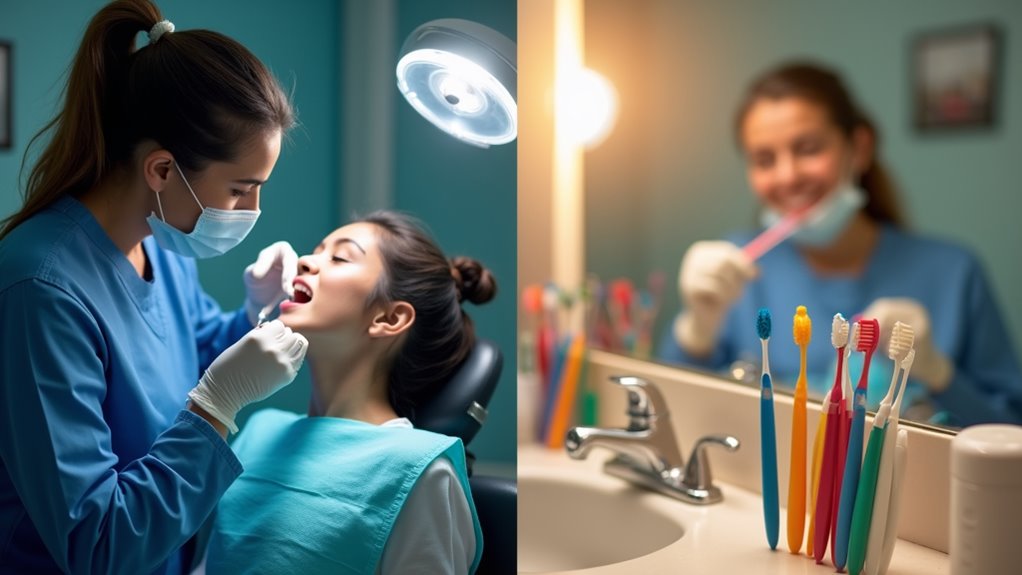
Dental hygienists are essential in promoting oral health through their education and expertise, which greatly enhances preventive care.
They assess individual needs and develop personalized treatment plans, ensuring tailored guidance for ideal dental hygiene.
Understanding the pivotal role of dental hygienists can empower patients to take charge of their oral health more effectively.
Education and Expertise
Oral health is greatly influenced by the education and expertise of dental hygienists, who play an essential role in preventive care. Through extensive dental education, these professionals acquire critical skills needed to identify oral health issues before they escalate.
Their training encompasses not only technical procedures but also an understanding of preventive dentistry, equipping them to educate patients on best practices for maintaining their oral hygiene. This specialized knowledge allows dental hygienists to tailor advice and treatment plans suited to individual needs.
Preventive Care Importance
Preventive care serves as the foundation for maintaining ideal oral health, and dental hygienists are pivotal in this effort. By emphasizing the importance of regular dental check-ups, they educate patients on the myriad preventive care benefits, such as early detection of issues like cavities and gum disease.
This proactive approach fosters a deeper understanding of personal oral care routines, empowering individuals to take charge of their health. Additionally, the guidance provided by hygienists contributes to long-term health, minimizing the risk of serious conditions that can arise from neglecting oral hygiene.
Ultimately, a strong emphasis on preventive care, led by skilled dental hygienists, not only improves the individual’s oral health but also enhances overall wellbeing in a compassionate and informed manner.
Personalized Treatment Plans
Individuals often benefit from personalized treatment plans tailored to their unique oral health needs, and dental hygienists play an essential role in this process.
Through customized assessments, hygienists evaluate a patient’s oral hygiene practices, dental history, and any specific concerns. This thorough understanding allows them to create effective plans that align with individual goals, whether they focus on improving gum health, enhancing cosmetic appearance, or managing dental anxiety.
These personalized strategies not only empower patients to take charge of their oral health but also foster a trusting relationship with their dental care providers.
Ultimately, the involvement of dental hygienists in developing tailored treatment plans underscores their commitment to patient-centered care and long-lasting oral wellness.
Common Mistakes in At-Home Oral Hygiene
While maintaining good oral hygiene is essential for overall health, many people fall prey to common mistakes in their at-home routines. Instances of improper brushing techniques can lead to ineffective plaque removal, while neglecting flossing entirely can result in gum disease.
Inadequate rinsing leaves debris behind, and overusing whitening products can damage enamel. Skipping routines, whether due to forgetfulness or an inconsistent schedule, profoundly affects oral health. Additionally, ignoring the tongue can allow bacteria to thrive.
Using hard bristles may cause gum damage, and sharing toothbrushes risks transmission of bacteria. Addressing these pitfalls with careful attention to esthetics and functionality can greatly improve at-home oral hygiene practices and foster healthier smiles for all.
Effective Brushing and Flossing Techniques
Improper techniques in brushing and flossing can greatly undermine one’s oral health efforts. To achieve effective oral hygiene, individuals should focus on proper brushing techniques, which include using a soft-bristled toothbrush at a 45-degree angle to the gum line, employing gentle circular motions to clean each tooth’s surface. It is recommended to brush for at least two minutes, ensuring no area is neglected.
In addition to brushing, mastering effective flossing techniques is essential. Utilizing about 18 inches of dental floss, individuals should wrap it around their fingers, gently guiding it between teeth using a C-shaped motion. This technique allows for peak plaque removal without damaging gum tissue.
Together, these methods create a robust oral care routine that fosters long-term dental health.
The Impact of Diet on Oral Health

Diet plays a pivotal role in determining one’s oral health, influencing not only the appearance of teeth but also the overall wellness of gums and oral tissues.
Dietary influences, particularly the consumption of sugary foods and beverages, can have a profound sugar impact on oral wellbeing. Sugars feed harmful bacteria that produce acids, leading to tooth decay and gum disease.
Additionally, insufficient intake of vitamins and minerals can weaken enamel and impair healing, further jeopardizing oral health.
By promoting a balanced diet rich in fruits, vegetables, and whole grains, individuals can better protect their teeth and gums.
Encouraging informed dietary choices is essential for those dedicated to serving others in their quest for improved oral hygiene and overall health.
When to Seek Professional Help for Oral Issues
Recognizing when to seek professional help for oral issues is essential for maintaining overall dental health.
Persistent pain or discomfort, noticeable swelling or redness, and challenges with an oral hygiene routine are significant indicators that intervention may be necessary.
Timely consultation with a dental professional can prevent further complications and support effective treatment.
Persistent Pain or Discomfort
Persistent pain or discomfort in the oral cavity can be a crucial indicator of underlying dental issues that require professional attention. Individuals experiencing chronic sensitivity, whether due to temperature changes or pressure, should be particularly vigilant.
Such symptoms may hint at more serious conditions, including cavities, gum disease, or even nerve damage. It is essential to prioritize one’s oral health, as ignoring these signals can lead to further complications.
Seeking professional help allows dental hygienists and dentists to accurately diagnose the issue and recommend appropriate treatments. Consequently, when discomfort becomes a continuous concern, a proactive approach is crucial.
Engaging with dental professionals not only addresses immediate pain but also fosters overall wellness in one’s dental health journey.
Noticeable Swelling or Redness
When individuals notice swelling or redness in their gums or oral tissues, it may indicate inflammation or infection that warrants professional assessment.
These symptoms can be critical signs of underlying gum health issues, such as gingivitis or periodontal disease. Recognizing inflammation signs early can lead to more effective treatment and prevention of further complications.
Engaging with a dental professional fosters a proactive approach to oral health, enabling personalized care tailored to individual needs. Patients are encouraged to seek help when these symptoms arise, as timely intervention can not only alleviate discomfort but also support overall gum health.
Ultimately, prioritizing professional assessment guarantees a thorough understanding of one’s oral condition and promotes lasting well-being.
Oral Hygiene Routine Issues
While maintaining a consistent oral hygiene routine is vital for overall dental health, issues may arise that necessitate professional intervention. Individuals should be vigilant regarding any persistent signs of gum disease, such as bleeding gums or inflammation.
Additionally, inadequate flossing techniques may lead to plaque buildup that home care cannot rectify. Patients should also consider their brushing frequency and whether they effectively use dental products like electric toothbrushes and mouthwash.
Neglecting tongue cleaning can contribute to oral health problems as well. Regular dental visits are important for monitoring issues that may not be immediately apparent.
Seeking professional help can provide tailored guidance to guarantee peak oral hygiene that serves not just the individual, but also fosters a healthier community.