
When choosing the best toothbrush, individuals should consider both manual and electric options. Manual brushes are effective when used correctly, with soft bristles recommended for sensitive gums. Electric toothbrushes often improve plaque removal efficiency and ease of use, particularly for those with dexterity limitations. Cost, environmental impact, and personal comfort are additional factors to weigh. Seeking guidance from dental professionals can further inform decisions. Understanding these elements can lead to improved dental health outcomes.
Highlights
- Consider hand dexterity and mobility; electric toothbrushes are easier for individuals with limited control, while manual toothbrushes may require more effort.
- Evaluate your time availability; electric toothbrushes typically clean more efficiently, making them suitable for busy lifestyles.
- Select bristle softness based on sensitivity; soft-bristled brushes are recommended to avoid gum irritation, whether manual or electric.
- Assess eco-consciousness; manual toothbrushes may have a lower environmental impact compared to electric ones that require batteries and motors.
- Consult with dental professionals for personalized recommendations, considering your overall health, brushing habits, and dental care goals.
Understanding Manual Toothbrushes
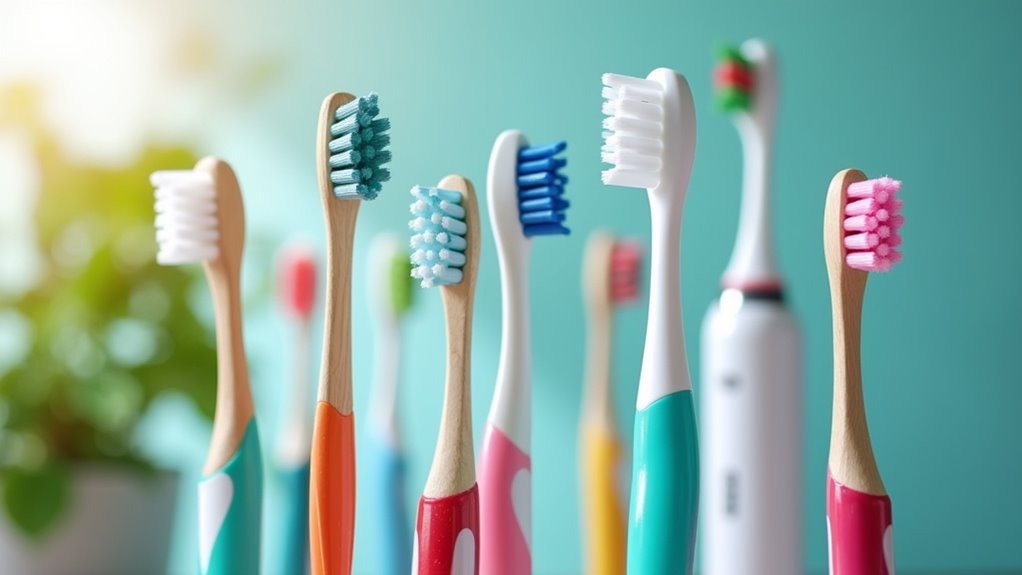
Although many people may gravitate toward electric toothbrushes for their convenience, manual toothbrushes remain a reliable option due to their effectiveness and ease of use.
Research indicates that proper brushing techniques are essential for ideal oral health; manual toothbrushes can provide excellent cleaning when used correctly. A gentle circular motion for at least two minutes helps remove plaque efficiently.
Proper brushing techniques with a manual toothbrush, using a gentle circular motion for two minutes, effectively remove plaque.
Additionally, the selection of bristle types is vital; soft bristles are generally recommended to avoid gum irritation while still ensuring effective cleaning. Manual toothbrushes are also more accessible and cost-effective, allowing individuals to serve their communities better by promoting oral hygiene.
With education on techniques and bristle types, caregivers can empower those they serve to maintain healthy smiles. Regular dental visits are essential since professional cleanings help remove tartar that manual brushing cannot eliminate.
Exploring Electric Toothbrushes
As more individuals seek to improve their oral hygiene routines, exploring electric toothbrushes reveals a host of benefits supported by scientific research.
Electric toothbrushes often come equipped with smart features, such as built-in timers that help guarantee adequate brushing time. Many models offer multiple cleaning modes tailored to specific needs, enhancing comfort and effectiveness.
Ergonomic designs make these brushes easier to handle, while portability options cater to users on the go. Battery life also varies among brands, providing flexibility for different lifestyles.
User reviews consistently highlight the convenience of easily replaceable heads, which maintain efficacy over time.
As these insights demonstrate, electric toothbrushes blend advanced technology with practical use, encouraging improved oral hygiene practices for many individuals.
Despite their benefits, electric toothbrushes do not eliminate the need for daily brushing, which remains essential for maintaining healthy teeth and gums.
Effectiveness of Plaque Removal
The effectiveness of plaque removal is a critical factor in maintaining ideal oral health, as inadequate plaque control can lead to various dental issues, including cavities and gum disease.
Research shows that electric toothbrushes typically offer superior cleaning efficiency compared to manual toothbrushes due to their advanced technology and consistent brushing motions. Studies have indicated that electric options can reduce plaque by up to 21% more over a three-month period.
This enhanced effectiveness not only improves oral hygiene but also encourages patient compliance, as users often experience cleaner teeth and healthier gums.
Ultimately, selecting a toothbrush that prioritizes effective plaque removal can profoundly influence long-term dental health outcomes, empowering individuals to make informed choices for better oral care.
Ease of Use and Accessibility

A well-designed toothbrush should prioritize ease of use and accessibility to accommodate the diverse needs of all users. Key factors to evaluate in toothbrush design include:
- Grip: Ergonomically shaped handles that provide a comfortable grip enhance control, especially for individuals with limited hand dexterity.
- Bristle Softness: Gentle bristles promote comfort while effectively cleaning teeth, reducing the risk of injury.
- Size and Shape: A compact head design allows easier maneuverability in hard-to-reach areas, catering to different oral anatomies.
- Weight: Lightweight models help minimize fatigue during brushing sessions, making it accessible for all users.
Focusing on these evaluations guarantees that toothbrushes serve their intended purpose while accommodating individual needs in oral hygiene routines.
Cost Considerations
When considering a toothbrush, cost is an important factor that extends beyond the initial purchase price.
An analysis of long-term expenses reveals that some toothbrushes may require replacement or additional costs, which can impact overall affordability.
Evaluating both initial investments and ongoing costs can help individuals make informed decisions that align with their dental care budget.
Initial Investment Comparison
Evaluating the initial investment for toothbrushes reveals a significant range in costs depending on the type and features selected.
Understanding the initial cost is essential for informed budget assessments. Here are some factors to take into account:
- Manual Toothbrushes: Typically range from $2 to $10, offering affordability and accessibility.
- Electric Toothbrushes: Often start at $20, with advanced models reaching $200, incorporating features like timers and pressure sensors.
- Replacement Heads: These can cost $5 to $20 each, adding to overall expenses, especially for electric models.
- Specialty Brushes: Options like orthodontic or sensitive models may have varying prices, typically between $5 and $15.
Long-Term Expense Analysis
Beyond the initial purchase, long-term expenses associated with toothbrush maintenance and replacement can considerably affect overall dental care budgets.
When considering manual versus electric toothbrushes, individuals must evaluate ongoing costs such as replacement brush heads or entire manual brushes every few months.
Electric toothbrushes generally incur higher upfront costs but may result in long-term savings due to more effective plaque removal, potentially decreasing future dental treatments.
Budget planning is essential for sustaining these expenses over time.
Environmental Impact
Although many people prioritize their oral health by selecting effective toothbrushes, the environmental impact of these choices often remains overlooked. The production and disposal of toothbrushes contribute notably to plastic waste.
To enhance sustainability practices, individuals should consider the following:
- Material: Opt for toothbrushes made from biodegradable or recyclable materials.
- Disposal: Utilize recycling options; some manufacturers have programs for recycling old brushes.
- Longevity: Choose high-quality brushes that last longer, reducing waste over time.
- Electric Considerations: For electric toothbrush users, consider models with replaceable brush heads to minimize waste.
Recommendations From Dental Professionals
Understanding the environmental implications of toothbrush choices leads to heightened awareness of effective oral care practices.
Dental professionals emphasize the importance of adhering to evidence-based guidelines when selecting a toothbrush. Recommendations often indicate that soft-bristled brushes are effective in removing plaque while minimizing damage to gums.
Additionally, electric toothbrushes are frequently endorsed for their ability to enhance brushing efficiency and effectiveness, particularly for those with limited dexterity.
Professional opinions suggest that patients should prioritize toothbrushes that include features such as built-in timers and pressure sensors to promote better brushing habits.
Regularly replacing toothbrushes every three to four months is also recommended to maintain ideal oral hygiene.
Personal Preference and Lifestyle Factors
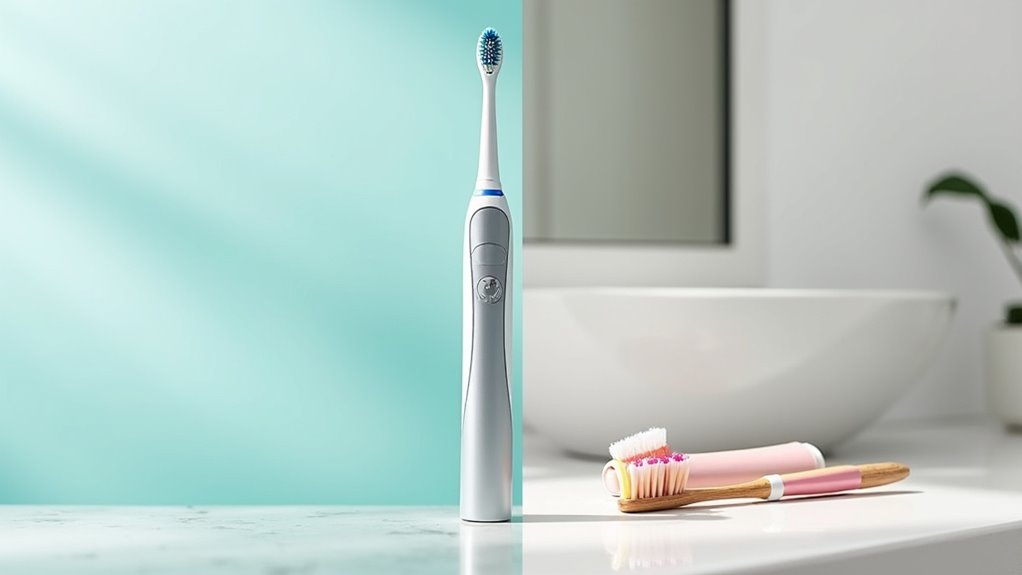
Personal preferences and lifestyle factors play a significant role in toothbrush selection, influencing both the effectiveness of oral care routines and overall dental health.
Understanding these factors can help individuals make informed decisions about their toothbrush preferences:
- Hand Dexterity: Those with limited mobility may prefer electric toothbrushes for ease of use.
- Time Availability: Busy lifestyles may necessitate the efficiency of electric toothbrushes for quicker brushing.
- Sensitivity: Individuals with sensitive gums may opt for soft-bristled manual toothbrushes or gentler electric options.
- Eco-Consciousness: Environmentally aware individuals might favor manual toothbrushes made from sustainable materials.